How Much Should a Small Business Spend on Google Ads?
The answer varies depending on your industry, local competition, and your goals.
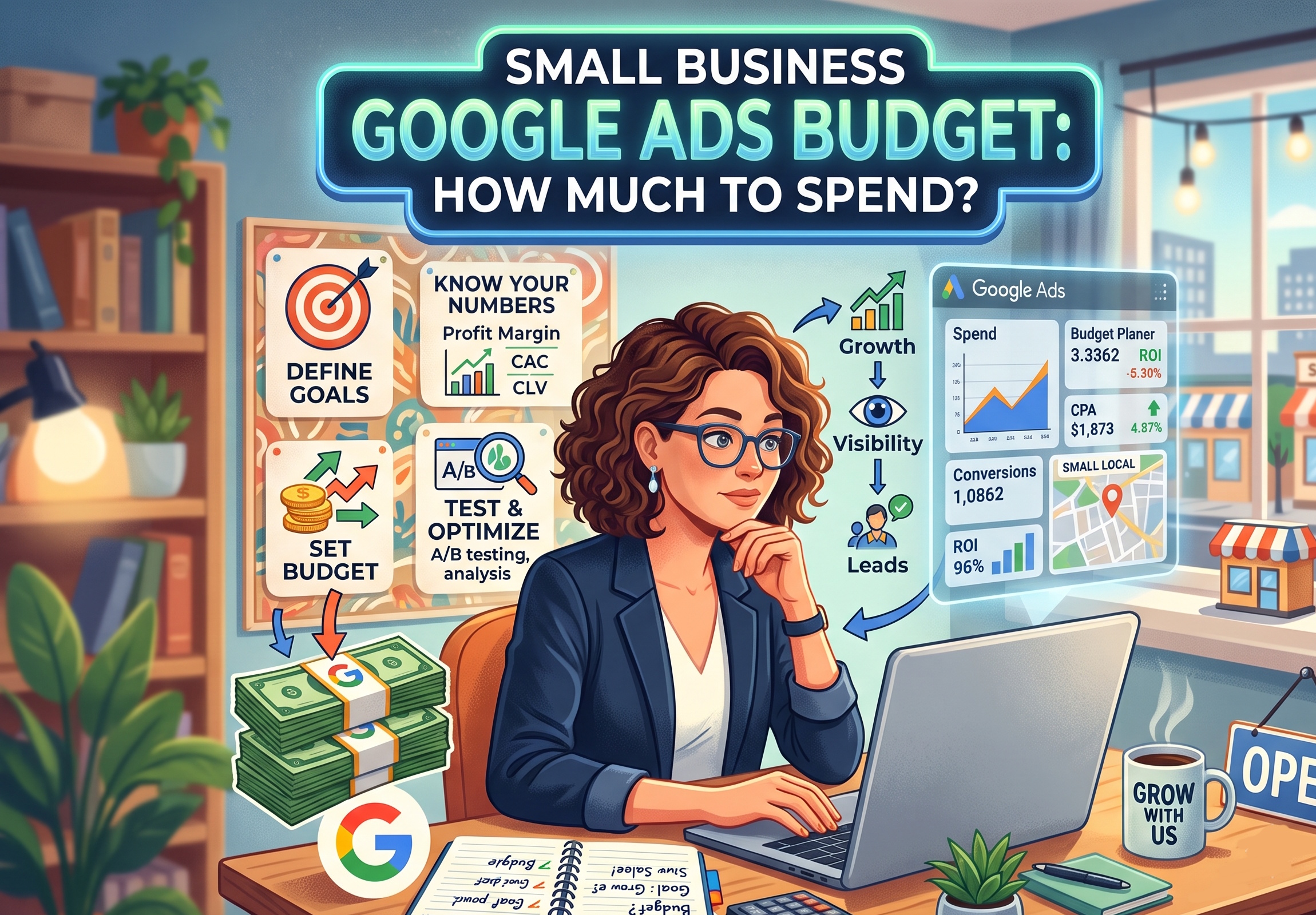
The Short Answer
There is no single number that works for every small business out there. The real answer is that it depends on your industry, where you are located, and how many clicks or leads you need per month. Beware of any agency that gives you a specific number you should spend without asking specific questions about your business: what you sell, for how much, and who & where you want to target with your ads.
There are ways to estimate what budget would work best for your business, and we'll outline some of the methods Propel Collective uses when advising our clients.
What Google Ads Actually Costs Right Now
WordStream's 2026 Google Ads benchmarks report estimated the following benchmarks for Google Ads when analyzing 13,000 US search advertising campaigns between April 2025 and March 2026:
- Average cost per click across all industries - $5.42
- Average conversion rate - 8.18%
- Average cost per lead - $66.69
It is important to note that these are averages across all industries, and the spread between these industries is wide. At the low end you have arts and entertainment businesses that pay around $1.63 per click, while attorneys and legal services sit at the top of the list paying $9.87. Home improvement, dental, and personal services all run well above the average.
This is why you'll see wildly different average CPC figures if you search around the internet. A lot of what sits at the top of the list on Google search is aggregator content that uses stale or mismatched numbers or AI slop that cites other AI content instead of actual research data. If a source doesn't tell you the sample size, the date range, and the methodology behind its number, you should not use it to base any decision around how much you should spend on Google Ads.
What Actually Influences Your Business's Cost Per Click (CPC)
There are four distinct factors that determine your campaign's CPC:
1) Competition in your industry. More advertisers bidding on the same keywords and search terms will increase the price. This is why legal and home services CPCs run high: the value of a converting one client justifies a higher bid, and anyone who wants to compete with them must match or exceed their bids.
2) Quality Score. Google rewards ads and landing pages that are relevant to the keyword being bid on with a lower price and punishes campaigns linking landing pages that do not contain the specific keywords you are targeting with a price increase. This is usually the easiest thing a small business can do to lower their ad cost, because it's fully within your control.
3) Campaign type. Search campaigns cost more per click than display (which are banner ads on websites) because they carry far more buying intent. Shopping and Performance Max campaigns blend search and display ads to deliver a lower average cost, but those savings come at a performance cost.
4) Geography and specificity. Targeting broader, more competitive geographic areas and broader match keywords cost will cost you more. If you narrow your geographic targeting (or look outside the major metropolitan areas) and target more specific keyword phrases (either phrase match or exact match) it will usually cost less per click and convert at a higher rate.
How to Estimate an Ads Budget for Your Business
Propel Collective has built a paid ads budget calculator, but if you'd like to calculate it yourself you can use this formula:
Monthly budget = target number of leads × your industry's average cost per lead (which you can find in the first link in this article)
Here's an example of what this could look like: If your industry's average cost per lead is $60 and you need 20 leads a month to hit your growth target, you're looking at a $1,200 monthly ad spend as a starting point. One thing to note is that this is an estimate, not a guarantee that this is all you would need to spend. Once you have your own campaign data showing your cost per lead, you can get a more accurate spend number than what you came up with using your industry's average.
Throughout our experience managing search ads (PPC) for our clients, we've found that higher-consideration, higher-cost services like financial advisory, would need around $4,000 a month in ad spend perform well. Our clients are able willing to invest this amount because the annual and lifetime value of a single client can cover the annual costs of their campaigns. For professional services like house painting or garage door repair, where the revenue per job is lower but the buyer is often ready to act immediately because the problem they have is urgent, $1,500 a month can be enough to stay competitive.
Ad Costs are Only One Part of the Equation
The one thing we haven't talked about yet that needs to be considered in your overall cost is the management of your campaigns. Whether you run campaigns yourself or hire it out, someone has to build the account, write the ads, monitor Quality Score, and optimize bids, ad copy, and targeting weekly. That time cost is real even and most small business owners underestimate how much ongoing attention Google Ads campaigns needs to stay efficient.
Agencies typically price PPC management one of two ways: a flat monthly fee, or a percentage of your ad spend. Either way, that management cost should show up on your budget as its own line, separate from what you're paying Google directly. If a proposal bundles the two together, ask for the split. You want to know what you're paying for clicks and what you're paying for a person to manage them.
One thing you don't have to worry about is accidentally going beyond your campaign's monthly budget (which used to be a problem and where the biggest financial penalty lived), because Google will not charge you above your campaign's monthly budget even if you get more clicks than your budget allowed for that month.
Is Google Ads the Right Move for Your Business Right Now?
Not every small business is ready for paid search, and if you decide to run it yourself, you face a steep learning curve that can cost you thousands in wasted media as you learn how to manage and optimize your campaigns. Deciding whether Google Ads makes sense for your business depends on your margins, your sales cycle, whether your website can convert the traffic once it arrives, and whether you have the time or expertise to actually manage your campaigns properly.
That's the conversation worth having before you set a budget and get started, not after.